
Losing a tooth can affect much more than your smile. A missing tooth may make chewing uncomfortable, affect speech, and gradually contribute to changes in the surrounding teeth and jawbone. Dental implants offer a long-term way to replace a missing tooth while restoring both function and appearance.
One of the most common questions patients ask at Green Park Dental is, “How long does it take to replace a missing tooth with an implant?”
The short answer is that the complete dental implant process can take several months, although some patients may receive a temporary tooth much sooner. The exact timeline depends on factors such as bone condition, gum health, the need for bone grafting, implant healing, and the type of restoration required.
If you are researching Dental Implants cost in South Delhi, it is important to understand that the price and treatment duration can vary considerably depending on your individual treatment plan.
What Is a Dental Implant?
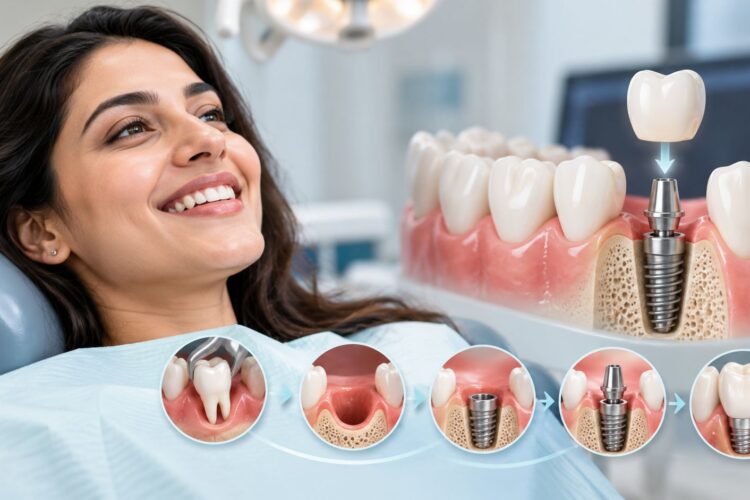
A dental implant is a tooth replacement system designed to replace the root of a missing tooth.
It generally consists of three parts:
- Dental implant fixture: A small titanium or compatible implant placed into the jawbone.
- Abutment: A connector that attaches the implant to the replacement tooth.
- Dental crown: The visible tooth-shaped restoration designed to resemble and function like a natural tooth.
Unlike a traditional removable denture, an implant is anchored into the jawbone. Once healing and integration are complete, it can provide stable support for a dental crown.
How Long Does a Dental Implant Take From Start to Finish?
For many patients, replacing a single missing tooth with a conventional dental implant takes approximately 3 to 6 months from implant placement to final crown placement.
However, the overall treatment may be shorter or longer depending on individual circumstances.
A typical timeline may look like this:
| Treatment Stage | Approximate Time |
| Consultation and planning | 1 to 2 appointments |
| Tooth extraction, if required | Same appointment or planned separately |
| Bone grafting, if required | Several months of healing |
| Implant placement | Usually about 30 to 60 minutes for a single implant |
| Initial healing | Around 1 to 2 weeks |
| Osseointegration | Usually 2 to 6 months |
| Abutment placement | Usually one appointment |
| Crown fabrication | Around 1 to 3 weeks |
| Final crown placement | Usually one appointment |
These are general estimates. Your dentist will determine the appropriate sequence after examining your teeth, gums, bone structure, and overall oral health.
Step 1: Dental Implant Consultation and Planning
The process begins with a detailed dental examination.
At Green Park Dental, implant planning may involve:
- Examination of the missing tooth area
- Assessment of gum health
- Evaluation of the available jawbone
- Dental X-rays
- 3D imaging when clinically required
- Review of your medical and dental history
- Discussion of implant and crown options
This stage is important because dental implant treatment should be planned around the patient’s anatomy rather than following a fixed timeline.
Your dentist will also determine whether you need a tooth extraction, bone graft, gum treatment, or other preparatory procedure before implant placement.
Step 2: Tooth Extraction, If Necessary
If the tooth is still present but cannot be saved, it may need to be removed before implant treatment.
In selected cases, an implant can be placed immediately after extraction. This is commonly called immediate implant placement.
However, immediate placement is not suitable for every patient.
The decision depends on factors such as:
- Condition of the extraction socket
- Presence of infection
- Amount and quality of available bone
- Gum and soft tissue condition
- Position of the tooth
- Overall treatment plan
Sometimes the dentist may recommend allowing the extraction site to heal before placing the implant.
Step 3: Bone Grafting, If Required
Adequate bone is important for supporting a dental implant.
When a tooth has been missing for a long time, the surrounding jawbone can gradually lose volume. Bone loss can also occur because of gum disease, trauma, infection, or previous dental procedures.
If there is insufficient bone, your dentist may recommend a bone graft.
Depending on the type of graft and the patient’s healing, this can add several months to the overall treatment timeline.
This is one reason why two patients replacing a single missing tooth may have very different treatment durations.
Step 4: Dental Implant Placement
Once the mouth is ready, the implant is surgically placed into the jawbone.
For a straightforward single implant, the surgical appointment itself may take approximately 30 to 60 minutes, although the exact time varies according to the case.
The implant is positioned carefully according to the treatment plan.
The procedure is generally performed under local anaesthesia, so patients should not feel pain during the placement.
Some patients may experience mild swelling, tenderness, or discomfort after the procedure. Your dental team will provide appropriate post-operative instructions.
Step 5: Healing and Osseointegration
This is one of the most important stages of implant treatment.
After placement, the implant needs time to integrate with the surrounding jawbone. This biological process is known as osseointegration.
It can take approximately 2 to 6 months, depending on factors such as:
- Bone quality
- Implant location
- Individual healing response
- Smoking or tobacco use
- Oral hygiene
- Presence of gum disease
- Overall health
- Whether bone grafting was performed
The implant may feel stable before complete biological integration has occurred, but this does not necessarily mean it is ready to support the final crown.
Your dentist determines when the implant is sufficiently healed for the next stage.
Can I Get a Temporary Tooth While the Implant Heals?
In many cases, yes.
Patients do not necessarily have to remain without a visible tooth throughout the healing period.
Depending on your situation, your dentist may recommend a temporary option such as:
- Temporary crown
- Removable temporary tooth
- Temporary bridge
- Other provisional restoration
Whether a temporary tooth is appropriate depends on the implant location, stability, bite forces, aesthetic requirements, and individual treatment plan.
It is important not to put excessive pressure on a healing implant unless your dentist specifically advises that it is safe.
Step 6: Abutment Placement
Once the implant has successfully integrated with the jawbone, the next stage is usually connecting the implant to the future crown.
This is done using an abutment.
Depending on the implant system and surgical approach, abutment placement may be performed as a separate procedure or may already be incorporated into the treatment process.
Your dentist will decide which approach is appropriate for your case.
Step 7: Dental Crown Placement
The final stage is the placement of the permanent crown.
Your dentist may take digital scans or traditional impressions to create a crown that fits your mouth and complements the surrounding teeth.
The crown is designed considering factors such as:
- Tooth colour
- Shape
- Size
- Bite
- Position of neighbouring teeth
- Smile aesthetics
Once the crown is ready and the implant is healthy and stable, it is attached to the implant through the abutment.
At this point, the missing tooth has been replaced with a fixed implant-supported restoration.
Why Does Dental Implant Treatment Take Several Months?
It is natural to wonder why replacing one tooth can take months when the surgical placement of an implant may take less than an hour.
The main reason is that implant treatment depends on biological healing.
The implant needs sufficient time to integrate with the jawbone before it is subjected to normal chewing forces.
This is different from procedures where a restoration can simply be placed over an existing tooth.
A dental implant is intended to function as an artificial tooth root, so the healing and integration stage is a critical part of successful treatment.
Can a Dental Implant Be Completed in One Day?
You may have heard terms such as “same-day implants,” “teeth in a day,” or “immediate loading.”
These techniques can provide a temporary or, in selected cases, definitive tooth replacement much sooner than conventional implant protocols.
However, same-day treatment does not mean that every patient can receive a permanent implant tooth in one day.
Immediate loading depends on several clinical factors, including:
- Adequate bone
- Implant stability at placement
- Appropriate bite conditions
- Good oral health
- Suitable implant position
- Patient-specific risk factors
A dentist should determine whether an immediate approach is appropriate rather than choosing it simply because it is faster.
What Can Make Dental Implant Treatment Take Longer?
Several factors can extend the treatment timeline.
1. Insufficient Bone
If bone grafting is necessary, additional healing time may be required before implant placement.
2. Gum Disease
Active periodontal disease should generally be addressed before implant treatment because healthy gums and supporting tissues are important for long-term implant health.
3. Infection
An infection around a failing or damaged tooth may affect the timing of extraction and implant placement.
4. Smoking and Tobacco Use
Smoking can interfere with healing and may increase the risk of implant-related complications. Your dentist may advise reducing or stopping tobacco use before and during treatment.
5. Complex Bite Conditions
Patients with significant bite problems or heavy grinding may require additional planning before receiving the final crown.
6. Multiple Missing Teeth
Replacing several teeth may require a more complex treatment plan than replacing a single tooth.
7. Individual Healing
Every patient heals differently. Your dentist may recommend additional healing time if the implant or surrounding tissues require it.
Is Dental Implant Treatment Painful?
Many patients are concerned about pain during implant placement.
The procedure is usually performed under local anaesthesia, which helps keep the treatment area numb during surgery.
Afterward, some patients may experience:
- Mild discomfort
- Swelling
- Tenderness
- Bruising
- Temporary sensitivity
These symptoms generally improve during the healing period.
Following your dentist’s instructions regarding medication, oral hygiene, diet, and activity can support recovery.
If you experience severe or worsening pain, persistent swelling, fever, or other concerning symptoms, contact your dental clinic promptly.
How Much Do Dental Implants Cost in Delhi?
The Dental Implants cost in delhi can vary from patient to patient.
There is no single price that applies to every implant case because the final cost depends on the complexity of treatment and the components required.
Factors that can affect the cost include:
- Type and brand of implant
- Number of implants required
- Need for tooth extraction
- Bone grafting
- Gum treatment
- Type of abutment
- Crown material
- Imaging and diagnostic requirements
- Complexity of the case
- Experience and expertise of the dental team
When comparing dental implant costs, patients should look beyond the implant fixture price alone.
Ask what is included in the quoted treatment fee and whether it covers the implant, abutment, crown, imaging, surgical procedure, follow-up appointments, and any additional procedures that may be necessary.
A detailed treatment plan from a qualified dentist can provide a more meaningful estimate than a generic online price.
How Long Do Dental Implants Last?
With appropriate care and regular professional monitoring, dental implants can provide long-term tooth replacement.
However, the implant itself and the dental crown are different components and can have different longevity.
Long-term implant health depends on factors such as:
- Regular brushing and interdental cleaning
- Professional dental check-ups
- Healthy gums
- Avoiding tobacco
- Managing teeth grinding when necessary
- Maintaining good overall oral health
- Following your dentist’s maintenance recommendations
Dental implants are not completely maintenance-free. Even though an implant cannot develop tooth decay like a natural tooth, the tissues around it can still develop inflammation and infection.
How Can You Speed Up Dental Implant Treatment?
The safest approach is not necessarily the fastest approach.
You can help your treatment progress smoothly by:
- Following pre-operative instructions
- Maintaining good oral hygiene
- Controlling existing gum disease
- Avoiding smoking and tobacco
- Attending scheduled appointments
- Following post-operative instructions
- Avoiding unnecessary pressure on the healing implant
- Informing your dentist about relevant medications and health conditions
Your dentist may recommend a faster treatment protocol when your clinical situation allows it.
What Happens If You Delay Replacing a Missing Tooth?
A missing tooth does not always require immediate implant placement, but delaying treatment can sometimes make future replacement more complicated.
Over time, tooth loss may be associated with:
- Bone resorption
- Movement of neighbouring teeth
- Changes in bite
- Difficulty chewing
- Food trapping
- Changes in facial or smile aesthetics
The extent of these changes varies between individuals.
If you have recently lost a tooth, an implant consultation can help determine whether immediate, early, or delayed treatment is appropriate.
Frequently Asked Questions
How many days does it take to get a dental implant?
The surgical placement of a single dental implant may take around 30 to 60 minutes, but the complete treatment takes longer because the implant needs time to integrate with the jawbone before the final crown is placed.
Can I get an implant immediately after tooth extraction?
In selected cases, yes. Immediate implant placement may be possible when the clinical conditions are suitable. Your dentist will evaluate the bone, gums, infection status, and implant stability before recommending this approach.
How long after an implant can I get a crown?
The crown is usually placed after the implant has adequately integrated with the jawbone. This may take approximately 2 to 6 months, although the timeline varies according to the patient and treatment protocol.
Is a dental implant better than a bridge?
Both implants and bridges can replace missing teeth. An implant does not require the neighbouring teeth to be prepared for support, while a conventional bridge generally uses adjacent teeth as anchors. The most suitable option depends on your oral health, bone condition, budget, aesthetics, and long-term treatment goals.
Does everyone need a bone graft for a dental implant?
No. Many patients have sufficient bone for implant placement without grafting. A bone graft may be recommended when there is inadequate bone volume or density.
Can I eat normally after getting a dental implant?
Your dentist may recommend a soft diet or specific dietary restrictions during the early healing period. As healing progresses, your diet can generally be expanded according to your dentist’s instructions.
What is the success rate of dental implants?
Dental implants have high reported success rates when appropriately planned and maintained, but outcomes vary depending on patient health, implant location, bone quality, oral hygiene, smoking, and other factors. Your dentist can discuss the expected prognosis for your specific case.
When Should You Consider a Dental Implant Consultation?
You may want to discuss dental implants with a dentist if you:
- Have recently lost a tooth
- Have a tooth that cannot be saved
- Have an old or uncomfortable bridge
- Are struggling with a removable denture
- Want a fixed tooth replacement
- Have noticed changes after long-term tooth loss
- Want to understand your treatment options before making a decision
A consultation is particularly useful because the best treatment depends on your individual oral anatomy and dental health.
Final Takeaway
Replacing a missing tooth with a dental implant is usually a multi-stage process rather than a one-day procedure.
For a straightforward case, the complete journey from implant placement to final crown may take approximately 3 to 6 months. Cases involving bone grafting, gum treatment, infection, or other complications may require additional time.
The goal should not simply be to replace the tooth as quickly as possible. Proper diagnosis, careful treatment planning, adequate healing, and appropriate follow-up are essential for achieving a stable and natural-looking result.
If you are considering dental implants, Green Park Dental can assess your individual situation and explain the treatment stages, expected timeline, available restoration options, and factors that may influence the Dental Implants cost in delhi.
