
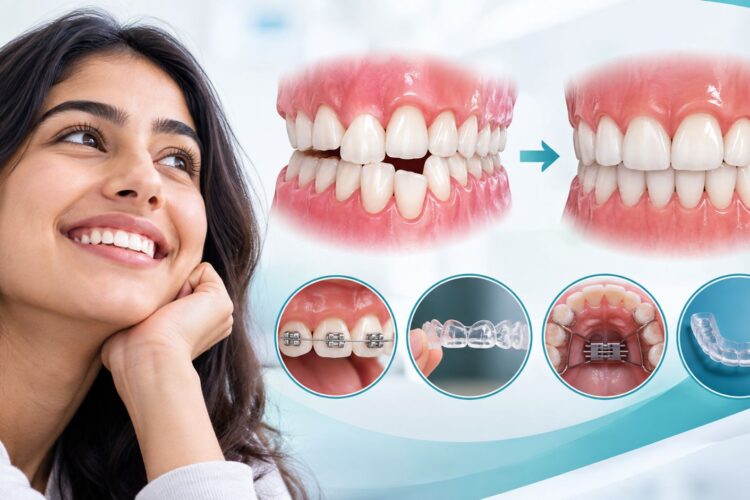
A healthy smile is about more than straight teeth. The way your upper and lower teeth come together, known as your bite or dental occlusion, can affect chewing, speaking, jaw comfort, and overall oral health. Problems such as an overbite, underbite, crossbite, or open bite may make everyday activities uncomfortable and can sometimes contribute to long-term dental concerns.
An orthodontist is a dental specialist trained to diagnose and manage irregularities involving the alignment of teeth and jaws. At Green Park Dental Clinic, orthodontic care focuses on understanding the individual cause of a bite problem and developing a treatment plan based on the patient’s dental needs, age, and overall oral health.
If you are experiencing difficulty biting or chewing, notice uneven tooth contact, or are concerned about your child’s developing bite, consulting an Orthodontist in Delhi can help identify the underlying issue and appropriate treatment options.
What Is a Bite Problem?
A bite problem, medically known as malocclusion, occurs when the upper and lower teeth do not align properly when the mouth is closed.
Some minor differences in tooth alignment may not require treatment. However, more significant bite irregularities can affect chewing efficiency, oral hygiene, tooth wear, or jaw function.
Common types of bite problems include:
- Overbite: The upper front teeth extend significantly over the lower front teeth.
- Underbite: The lower front teeth extend beyond the upper front teeth.
- Crossbite: Some upper teeth sit inside or outside the corresponding lower teeth.
- Open bite: Certain upper and lower teeth do not meet when the mouth is closed.
- Crowding: There is insufficient space for teeth to align properly.
- Spacing: Excessive gaps occur between teeth.
- Deep bite: The upper front teeth overlap the lower teeth excessively.
Identifying the specific type of malocclusion is an important first step toward selecting appropriate treatment.
How Do Orthodontists Diagnose Bite Problems?
Before recommending treatment, an orthodontist performs a detailed assessment of the teeth, jaws, facial structure, and bite.
The evaluation may include:
1. Dental Examination
The orthodontist examines the position of the teeth and observes how the upper and lower arches meet. They may also assess tooth wear, crowding, spacing, and other dental concerns.
2. Bite Analysis
The dentist or orthodontist evaluates how the teeth contact one another during normal biting and movement. This helps determine whether the problem involves tooth positioning, jaw development, or both.
3. Dental X-Rays
Depending on the patient’s condition, X-rays may be recommended to examine the roots of teeth, jawbone, developing teeth, and overall dental structures.
4. Digital Scans or Impressions
Digital intraoral scanning can create a detailed three-dimensional representation of the teeth. These records can assist with treatment planning and monitoring progress.
5. Facial and Jaw Assessment
In some cases, the relationship between the jaws and facial structures is important to diagnosis. This is particularly relevant for patients with significant overbites, underbites, or jaw discrepancies.
Based on these findings, the orthodontist can determine the severity and likely cause of the bite problem.
How Do Orthodontists Correct Bite Problems?
Treatment depends on the type and severity of malocclusion, the patient’s age, jaw development, and overall oral health. Orthodontists may use one or more approaches to gradually guide teeth and, when appropriate, influence jaw development.
Braces
Traditional braces use brackets, wires, and other components to apply controlled forces to the teeth.
Over time, these forces gradually move teeth toward healthier positions. Braces can address many alignment and bite concerns, including crowding, spacing, overbite, underbite, and crossbite.
Modern braces may be available in different designs depending on individual treatment needs and preferences.
Clear Aligners
Clear aligners are removable orthodontic appliances designed to gradually reposition teeth.
Patients typically wear a sequence of custom-made aligners, with each set applying controlled pressure to specific teeth. They may be suitable for selected mild to moderate alignment and bite problems.
However, clear aligners are not automatically appropriate for every orthodontic condition. An orthodontic evaluation is necessary to determine whether they can achieve the desired correction.
Elastics
Orthodontic elastics, sometimes called rubber bands, can help correct specific bite relationships.
They apply additional directional forces between the upper and lower teeth or jaws. Depending on the treatment plan, patients may need to wear elastics for a prescribed number of hours each day.
Following the orthodontist’s instructions is important because inconsistent elastic use can affect treatment progress.
Space Management
Crowding can contribute to bite and alignment problems. Depending on the individual situation, an orthodontist may create or preserve space using orthodontic techniques.
In some patients, treatment may involve guiding existing teeth into better positions. In other cases, tooth extraction may be considered when there is insufficient space and other approaches are not suitable.
The decision is made after evaluating the patient’s teeth, facial structure, and treatment goals.
Growth Modification in Children
Children and adolescents may have additional treatment options because their jaws are still developing.
For certain growth-related bite problems, orthodontic appliances may be used to influence jaw development or improve the relationship between the upper and lower jaws.
The appropriate timing varies from one child to another, which is why professional assessment is important.
Orthognathic Surgery for Severe Jaw Problems
In adults with significant skeletal discrepancies, orthodontic treatment alone may not fully correct the underlying jaw relationship.
In selected cases, orthodontic treatment may be combined with orthognathic surgery, which is performed by an appropriately trained oral and maxillofacial surgeon. Orthodontics before and after surgery helps coordinate the teeth with the corrected jaw position.
This approach is generally reserved for specific, more complex skeletal conditions.
Can Bite Problems Be Corrected Without Braces?
Not every bite problem requires traditional metal braces. Depending on the diagnosis, treatment may involve clear aligners or other orthodontic appliances.
However, it is important not to choose an appliance based only on appearance or convenience. A treatment that works for one patient’s bite may not be appropriate for another.
An Orthodontist in Delhi can assess the underlying cause of the bite problem and explain which treatment options are appropriate for your individual condition.
Why Is Correcting Bite Problems Important?
Correcting significant malocclusion can have several potential benefits.
Improved Chewing
Better alignment can help the teeth work together more efficiently during chewing.
Easier Oral Hygiene
Crowded or overlapping teeth can make brushing and flossing difficult. Improving alignment may make certain areas easier to clean.
Reduced Uneven Tooth Wear
An abnormal bite can place excessive forces on particular teeth. Correcting the alignment may help distribute biting forces more appropriately.
Improved Speech in Selected Cases
Certain dental and bite irregularities can contribute to speech difficulties. Orthodontic correction may help in appropriate cases, although speech problems can have many causes.
Better Dental Function
A balanced relationship between the upper and lower teeth can support more comfortable everyday dental function.
At What Age Should Bite Problems Be Evaluated?
Orthodontic problems can be identified at different stages of life.
Children may benefit from an early orthodontic evaluation, particularly when there are concerns about jaw growth, tooth eruption, severe crowding, crossbite, or other developing problems.
Teenagers are commonly treated because most permanent teeth have erupted and the jaws are still developing.
Adults can also receive orthodontic treatment. Modern orthodontic techniques can address many alignment and bite concerns in adulthood, provided the teeth, gums, and supporting structures are appropriately healthy.
There is no single age that applies to every patient. The right time for treatment depends on the specific condition.
How Long Does Bite Correction Take?
Treatment duration varies considerably.
Factors that can influence treatment time include:
- Severity of the bite problem
- Patient’s age and growth stage
- Type of orthodontic treatment
- Complexity of tooth movement
- Jaw relationship
- Oral health
- Patient compliance
- Regularity of orthodontic appointments
Some cases may be completed relatively quickly, while more complex bite corrections can require substantially longer treatment.
Your orthodontist can provide a more personalized estimate after completing a clinical assessment and reviewing the necessary diagnostic records.
What Happens After Bite Correction?
Retention is an important part of orthodontic treatment.
Once teeth have been moved into their planned positions, retainers are commonly prescribed to help maintain the results. Teeth can naturally shift over time, so following the orthodontist’s retention instructions is essential.
The type and duration of retainer use vary depending on the individual case.
When Should You Consult an Orthodontist?
Consider scheduling an orthodontic evaluation if you notice:
- Difficulty biting or chewing
- Teeth that do not meet properly
- Significant crowding or spacing
- An obvious overbite or underbite
- A crossbite or open bite
- Teeth that appear unusually worn
- Jaw discomfort associated with biting
- Difficulty maintaining oral hygiene because of tooth positioning
- Concerns about your child’s developing teeth or jaw
Early professional evaluation does not necessarily mean immediate treatment. It can help determine whether monitoring, preventive care, or active orthodontic treatment is appropriate.
Why Choose Green Park Dental Clinic for Orthodontic Care?
At Green Park Dental Clinic, orthodontic care begins with understanding the patient’s individual dental and bite concerns. A thorough assessment can help identify the type of malocclusion and guide the selection of suitable treatment options.
Whether the concern involves crowded teeth, spacing, an overbite, underbite, or another bite irregularity, treatment should be planned according to the patient’s clinical requirements rather than using a one-size-fits-all approach.
If you are looking for an Orthodontist in Delhi, a professional consultation can help you understand your bite condition, available treatment approaches, expected treatment duration, and retention requirements.
Frequently Asked Questions
What is the most common bite problem?
Overbite, crowding, spacing, crossbite, underbite, and open bite are among the common orthodontic problems. The prevalence and severity can vary between individuals and populations.
Can orthodontists correct an overbite?
Yes. Depending on its cause and severity, an overbite may be treated using braces, clear aligners, elastics, growth-modification appliances in appropriate younger patients, or other orthodontic approaches.
Can an orthodontist fix an underbite?
Some underbites can be corrected with orthodontic treatment, particularly when the problem is primarily related to tooth positioning. More significant skeletal underbites may require a combination of orthodontics and jaw surgery.
Are clear aligners suitable for bite correction?
Clear aligners can correct certain bite and alignment problems, but suitability depends on the specific diagnosis and complexity of the case. An orthodontist should determine whether aligners are appropriate.
Does correcting a bite improve oral health?
Correcting significant alignment problems may make teeth easier to clean and can improve dental function. However, good brushing, flossing, professional dental care, and healthy habits remain important after orthodontic treatment.
Can adults get bite problems corrected?
Yes. Adults can undergo orthodontic treatment for many types of malocclusion. Treatment planning depends on tooth and gum health, bone support, jaw relationships, and the nature of the bite problem.
Conclusion
Bite problems are not simply cosmetic concerns. Depending on their severity and cause, they can affect chewing, oral hygiene, tooth wear, and overall dental function. Orthodontists use detailed diagnosis and controlled tooth movement to address many types of malocclusion.
Treatment may involve braces, clear aligners, elastics, orthodontic appliances, or, in selected complex cases, a combination of orthodontics and jaw surgery. Because every bite is different, professional assessment is the best way to understand the cause of the problem and determine an appropriate treatment approach.
If you are concerned about your bite or are searching for an Orthodontist in Delhi, consider consulting Green Park Dental Clinic for an individualized orthodontic evaluation and treatment discussion.
