
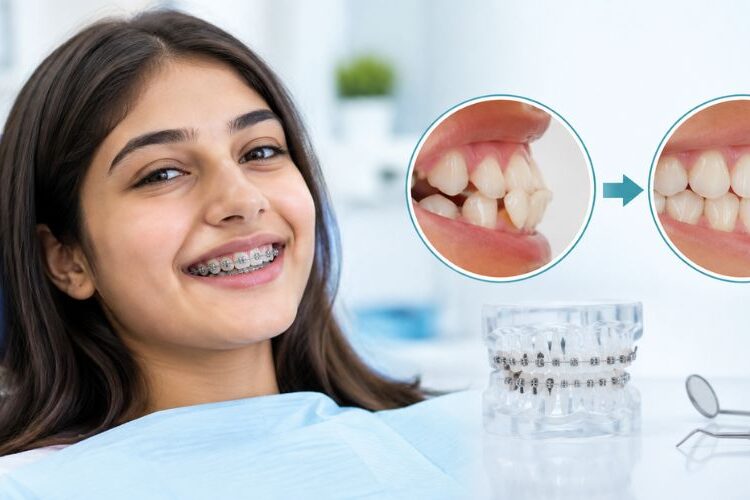
A healthy smile is about more than straight teeth. The way your upper and lower teeth come together-known as your bite or dental occlusion-can affect chewing, speech, comfort, and overall oral health. When teeth or jaws are not properly aligned, orthodontic treatment can help create a more balanced and functional bite.
At Green Park Dental Clinic, orthodontic care focuses on improving both the appearance and function of your smile. If you are experiencing difficulty chewing, uneven tooth wear, crowded teeth, or jaw discomfort, consulting an orthodontist in Delhi can help determine whether alignment treatment may be appropriate for you.
What Is a Dental Bite?
Your bite describes how your upper and lower teeth meet when you close your mouth. Ideally, the teeth should fit together comfortably and allow you to chew efficiently.
Several types of bite problems can develop, including:
- Overbite: The upper front teeth extend too far over the lower front teeth.
- Underbite: The lower teeth extend beyond the upper teeth.
- Crossbite: Some upper teeth sit inside the lower teeth when you bite down.
- Open bite: Certain upper and lower teeth do not meet when the mouth is closed.
- Crowding: There is insufficient space for teeth to align properly.
- Excessive spacing: Gaps occur between teeth because of missing teeth, tooth-size differences, or other factors.
These issues can vary in severity and may affect people of different ages.
How Does Orthodontic Treatment Improve Your Bite?
Orthodontic treatment uses controlled forces to gradually move teeth into more suitable positions. Depending on the individual’s needs, treatment may involve braces, clear aligners, retainers, or other orthodontic approaches.
1. It Aligns Crowded Teeth
Crowded teeth can overlap or rotate, making it difficult for the upper and lower teeth to meet correctly. Orthodontic treatment can gradually create a more organized alignment, helping improve the relationship between the teeth.
Better alignment can also make daily brushing and flossing easier, supporting long-term oral hygiene.
2. It Corrects Overbite and Underbite
An overbite or underbite can affect the way your front and back teeth contact each other.
An orthodontist evaluates the position of the teeth and, when appropriate, the relationship between the jaws. Treatment may then be planned to improve tooth positioning and bite function.
For growing children and teenagers, timing can be particularly important because jaw development may influence the treatment approach.
3. It Helps Correct Crossbite
A crossbite occurs when one or more upper teeth bite inside the corresponding lower teeth. If left untreated, certain types of crossbite may contribute to uneven tooth wear or functional difficulties.
Orthodontic treatment can help guide the affected teeth toward a healthier relationship with the opposing teeth.
4. It Can Improve Chewing Efficiency
Your teeth work together as a system. When they are properly positioned, biting and chewing can become more comfortable and efficient.
By improving tooth alignment and the way the upper and lower teeth meet, orthodontic treatment may help create a more functional chewing pattern.
5. It Helps Distribute Biting Forces
Ideally, biting forces should be distributed appropriately across the teeth. Significant misalignment can place excessive pressure on particular teeth.
Correcting the bite can help establish more balanced tooth contacts. This may be beneficial for reducing unnecessary stress and uneven wear, although the outcome depends on the individual’s specific dental condition.
6. It May Reduce Uneven Tooth Wear
When teeth do not meet properly, certain surfaces may experience increased contact. Over time, this can contribute to uneven wear.
Orthodontic treatment may help improve the alignment and contact between teeth, supporting a more balanced bite.
However, existing tooth wear may have multiple causes, including grinding, clenching, acidic foods, and other dental conditions. A professional examination is important before determining the cause.
7. It Can Make Oral Hygiene Easier
Severely crowded or overlapping teeth can be harder to clean effectively. Once teeth are properly aligned, brushing and flossing may become easier.
This does not eliminate the need for good oral hygiene. Regular brushing, interdental cleaning, dental checkups, and professional cleanings remain important throughout and after orthodontic treatment.
What Are the Signs of a Bite Problem?
You may benefit from an orthodontic evaluation if you notice:
- Difficulty biting or chewing
- Teeth that do not meet comfortably
- Frequent cheek or tongue biting
- Significant crowding or overlapping
- Noticeable gaps between teeth
- An overbite or underbite
- Teeth that appear unusually worn
- Jaw discomfort associated with your bite
- Difficulty keeping certain areas clean
- Teeth that have shifted over time
Not every bite difference requires orthodontic treatment. An orthodontist can assess your teeth, jaws, facial structure, and overall oral health before recommending treatment.
What Does an Orthodontist Do During a Bite Evaluation?
An orthodontic assessment generally begins with a discussion about your concerns and dental history. The orthodontist may examine your teeth and bite and evaluate how your upper and lower jaws relate to each other.
Depending on your situation, diagnostic records such as photographs, dental scans, or X-rays may be recommended.
The purpose is to understand why the bite is misaligned and determine which treatment options, if any, are suitable.
Braces vs. Clear Aligners for Bite Correction
Both braces and clear aligners can be used for certain orthodontic problems, but they are not interchangeable for every patient.
Braces use brackets, wires, and other components to apply controlled forces to the teeth.
Clear aligners are removable trays designed to progressively move teeth according to a customized treatment plan.
The appropriate option depends on factors such as the type and severity of the bite problem, tooth position, age, treatment goals, and patient preferences.
A qualified orthodontist in Delhi can explain which approach is appropriate after evaluating your individual bite.
When Should You See an Orthodontist?
Orthodontic problems can be identified during childhood, adolescence, or adulthood. Children may benefit from an orthodontic evaluation while their teeth and jaws are developing, while adults can also receive orthodontic treatment for many alignment concerns.
You do not necessarily need to wait until your teeth become severely crooked or uncomfortable before seeking an evaluation.
If you are concerned about your bite, an assessment by an experienced orthodontic professional can help you understand whether treatment is necessary.
How Long Does Bite Correction Take?
Treatment time varies considerably from one person to another. It depends on the complexity of the bite problem, the treatment method, the movement required, growth and development, and how consistently treatment instructions are followed.
Some relatively straightforward alignment concerns may require less time, while complex bite problems can require longer treatment.
Your orthodontist should provide an estimated treatment timeline after examining your teeth and developing a personalized plan.
Why Choose Green Park Dental Clinic?
Choosing an orthodontic provider involves more than looking for a convenient location. Patients should consider the clinician’s qualifications, experience, diagnostic approach, treatment options, communication, and follow-up care.
At Green Park Dental Clinic, the focus is on understanding each patient’s dental concerns and developing treatment plans based on individual needs. If you are looking for the Best orthodontist in Delhi, it is important to have a detailed consultation and discuss your treatment goals before making a decision.
Frequently Asked Questions
Can orthodontic treatment improve my bite?
Yes. Orthodontic treatment is designed to correct certain tooth and bite alignment problems by gradually moving teeth and, in selected cases, addressing jaw-related relationships.
Does a bad bite always require braces?
No. Treatment depends on the specific problem. Depending on the case, options may include traditional braces, clear aligners, or other orthodontic approaches.
Can adults improve their bite with orthodontic treatment?
Yes. Adults can undergo orthodontic treatment for many types of alignment and bite problems. The treatment plan depends on individual dental and periodontal health.
Is bite correction only about improving appearance?
No. Orthodontic treatment can have functional goals as well, including improving tooth alignment, bite relationships, chewing function, and the distribution of biting forces.
How do I know if I need an orthodontic consultation?
If your teeth do not meet comfortably, you have noticeable crowding or spacing, or you experience difficulty chewing or other bite-related concerns, an orthodontic evaluation may help identify the underlying issue.
Improve Your Bite With Personalized Orthodontic Care
A well-aligned bite can contribute to comfortable chewing, easier oral hygiene, and a more balanced smile. Because every bite is different, treatment should be based on a proper clinical assessment rather than a one-size-fits-all approach.
If you are considering orthodontic treatment, Green Park Dental Clinic can help you understand your alignment concerns and available treatment options. Consulting an experienced orthodontist in Delhi is a practical first step toward determining whether orthodontic treatment is suitable for your smile.
